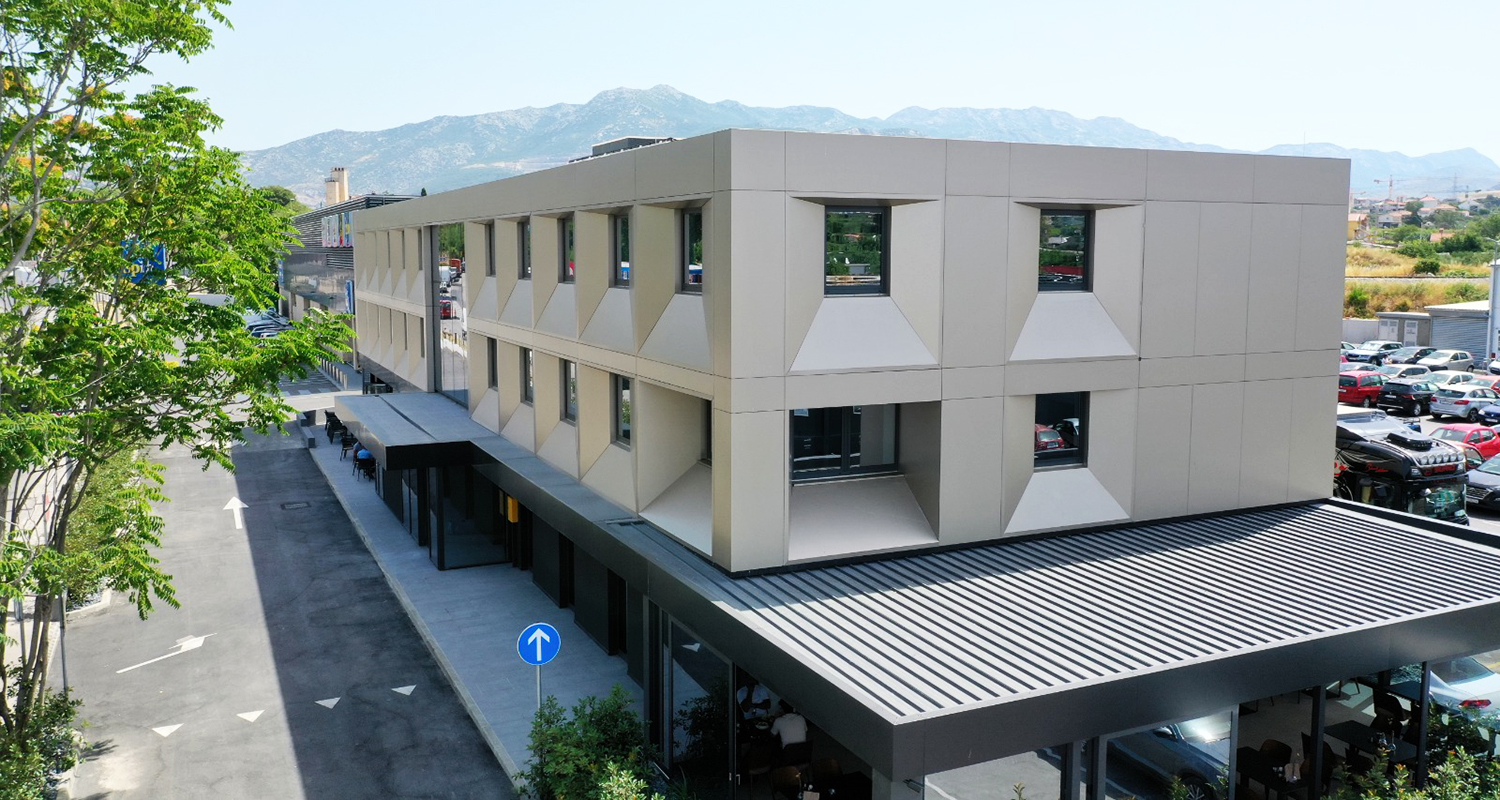
Ventilated facades are a contemporary construction solution that offers numerous benefits in terms of energy efficiency, aesthetics, and building durability. What are ventilated facades?
A ventilated facade consists of an external cladding that is not directly attached to the load-bearing wall but is mounted on a substructure, creating a ventilated air gap between the cladding and the wall. This gap allows for natural air circulation, which helps regulate temperature and moisture within the building. Advantages of ventilated facades:
- Energy efficiency: Ventilated facades reduce the need for heating and cooling, saving up to 30% in energy costs.
- Improved insulation: They provide excellent thermal and acoustic insulation, enhancing indoor comfort.
- Durability and resistance: The exterior cladding protects the building from weather influences such as rain, snow, and UV radiation, extending the building’s lifespan.
- Aesthetic flexibility: Various materials, colors, and textures allow for customization to
different architectural styles.
Disadvantages:
- Higher initial costs: Installation requires higher upfront investment compared to
traditional facades. - Maintenance: Although durable, ventilated facades require regular upkeep to
maintain their appearance and function.
Installation costs:
Costs depend on the selected materials, design complexity, and building size. Despite the higher initial investment, long-term energy savings and reduced maintenance make them a worthwhile investment.
Conclusion:
Ventilated facades are a modern and efficient solution for improving the energy performance, aesthetics, and longevity of buildings. Before making a decision, consulting with professionals is recommended to select the most suitable system for your specific building needs. Need expert support in selecting and implementing a ventilated facade? Contact us. Our team of specialists will gladly help you find the best solution for your property. Get in touch for a consultation and quote!